- Electronics People Since 1965
- +91-9821745455
- hiren@brilliantelectronics.com
STEMlab 125-14 Gen 2
Product Enquiry
Product Features
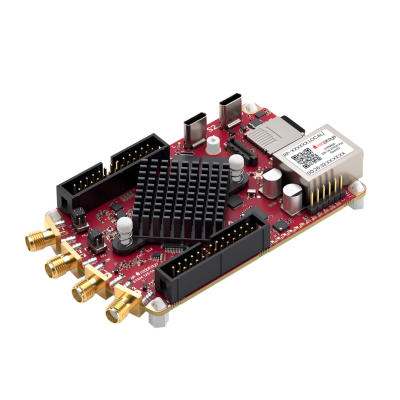
The STEMlab 125-14 GEN 2 series represents a major leap in performance, precision, and OEM integration flexibility. Designed for modern engineers, researchers, and developers, it offers a compact, open-source platform with upgraded hardware throughout. This generation features an enhanced analog design for better signal integrity, lower jitter, and higher ENOB—ideal for both lab use and embedded system integration.
Available in standard, PRO, and Z7020 PRO variants to meet a range of performance needs. Ethernet connectivity, USB-C power, and web-based remote access enable easy deployment across applications.
Part Descriptions
Key features:
-
High-performance RF signal acquisition & generation
-
Enhanced analog design for reduced noise and jitter
-
Xilinx Zynq SoC (CPU + FPGA) with improved RAM for real-time processing
-
Up to 4 analog inputs and outputs (depending on model)
-
Remote access via web-based apps over Ethernet
-
USB-C power input and optional external clocking
-
Open-source software stack with Linux shell access
-
Works with Linux or Windows PC
-
Free online apps (oscilloscope & signal generator, spectrum, Bode analyzer, logic analyzer, LCR meter*, streaming, network manager and calibration tool)
-
Can be controlled remotely using LabVIEW, MATLAB, Python, or Scilab
-
Can be programmed to meet custom needs
-
An app marketplace with several free apps available
-
Ready for prototyping, development, testing, or OEM integration
Applications:
- Automated testing
- Remote measurement
- Acoustic signal processing
- Communications
- Remote scope meters
- Portable test and measurement tool
- Remote system debugging
- OEM DAQ device
Red Pitaya’s STEMlab 125-14 Gen 2 boards are a revolutionary upgrade, built for engineers tackling the most demanding applications in aerospace, defense, quantum research, photonics, and RF communications. With enhanced performance, industrial-grade reliability, and open-source flexibility, it accelerates innovation across industries—while remaining versatile enough for advanced research and academia.